The Academy for Philosopher-Builders

Every technological revolution presents a choice: build for freedom or watch as others build for control. 

AI already mediates 20% of our waking lives. Left unchecked, this trends toward control: automated censorship, centralized power, and systems that optimize without asking why. But the future isn’t fixed.

At Cosmos, we train philosopher-builders: technologists who fuse deep inquiry with technical skill to ensure that AI serves the human good.

We’re training people to both question and build. And in doing so, building a “philosophy-to-code” pipeline: translating the principles of human flourishing into the infrastructure that shapes our lives.

Programs

We train philosopher-builders—technologists who pair serious inquiry with the skill to build systems that serve the human good.

We do this through research placements, fellowships, fast grants, educational seminars, and a world-class network at the intersection of philosophy and AI.

Our work advances three pillars:

  • Truth-seeking: the ability to inquire openly and correct our errors.
  • Human autonomy: the cultivated capacity for self-direction.
  • Decentralization: systems that resist coercion, capture and control.

Research

Pioneering the philosophy-to-code pipeline.

Two hundred fifty years ago, America’s founders translated the ideals of a free society into law. Today, we must do the same with code.

To do this, Cosmos launched the Human-Centered AI Lab at the University of Oxford—the first AI lab dedicated to translating philosophical concepts into open-source software. 

We support this research so that the principles that matter—such as human autonomy, truth-seeking, and decentralization—get written into the code that will shape our future.

Cosmos Grants

Fast funding for bold AI prototypes.

Cosmos Grants backs early-stage projects that link AI to human flourishing—expanding autonomy, enabling truth-seeking, and advancing decentralization.

Inspired by Emergent Ventures, this program offers fast, flexible support to builders working on ambitious ideas.

We partner with expert institutions for specific rounds: the first of these being a $1M cash + compute funding round with the the Foundation for Individual Rights and Expression for projects in AI for truth-seeking.

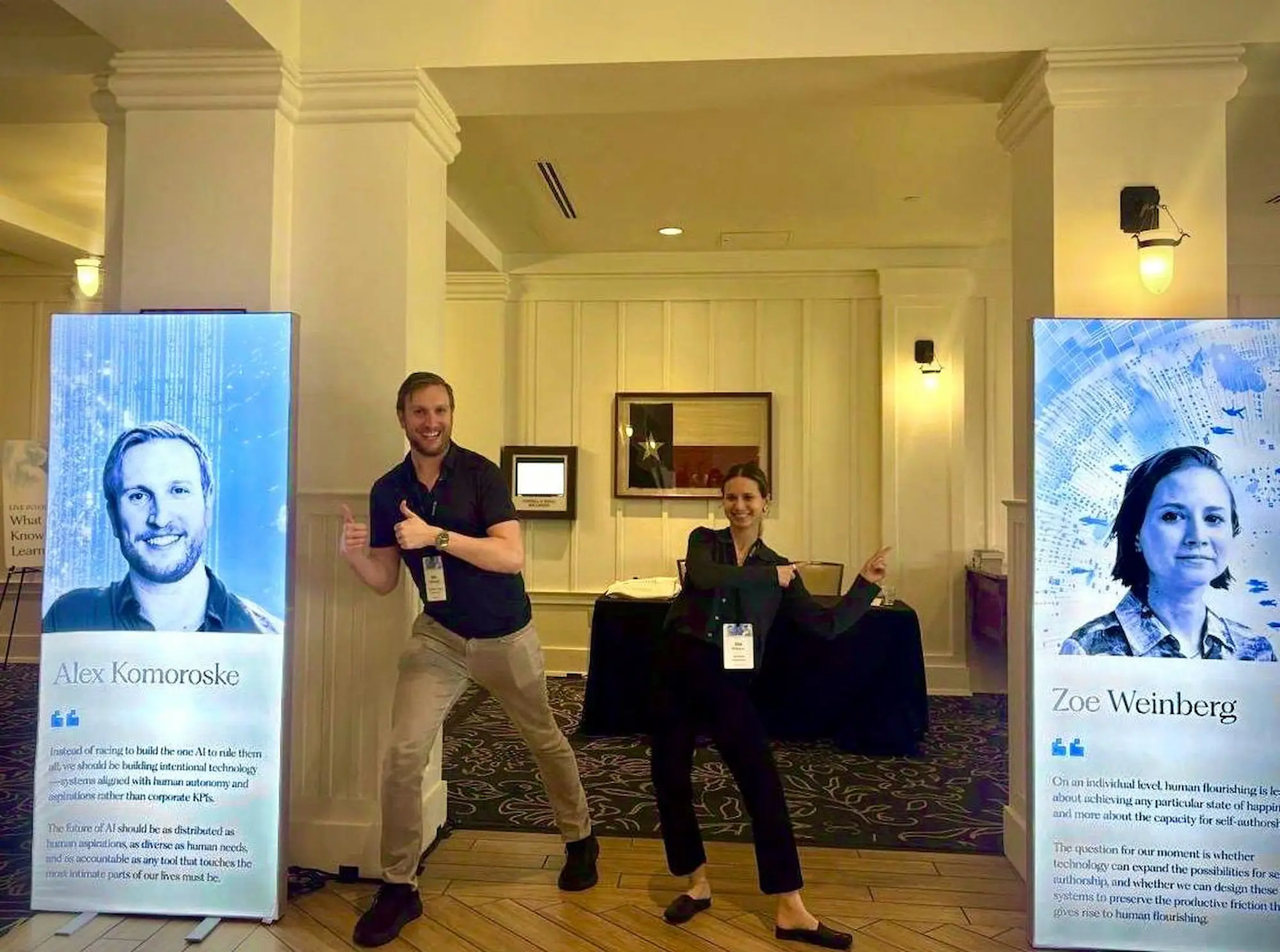
Founded and led by Jason Zhao, Darren Zhu, Zoe Weinberg, and Alex Komoroske

Meet our winning cohorts one and two. And our first round of AI x truth-seeking grantees.

Apply Now

Cosmos Fellowship

Cultivating a new kind of technologist.

The Cosmos Fellowship supports emerging technologists who pair deep philosophical insight with advanced AI understanding.

Fellowships are full-time, multi-month programs that provide Fellows with funding, mentorship, and access to a global network of researchers, builders, and institutions. 

Fellows may join the Human-Centered AI Lab at Oxford, work with Cosmos mentors, or pursue independent projects across disciplines (subject to host agreements).

Register Your Interest 


Cosmos Senior Research Fellowship

Cosmos provides multi-year, unrestricted funding for visionaries pursuing paradigm-shifting work at the intersection of technology and human flourishing. This 2-7 year fellowship has minimal obligations, recognizing that groundbreaking research requires both freedom and long-term support.

By Nomination Only • Learn More

Education

(Re)discovering the principles of human flourishing and how to preserve these in the AI age.

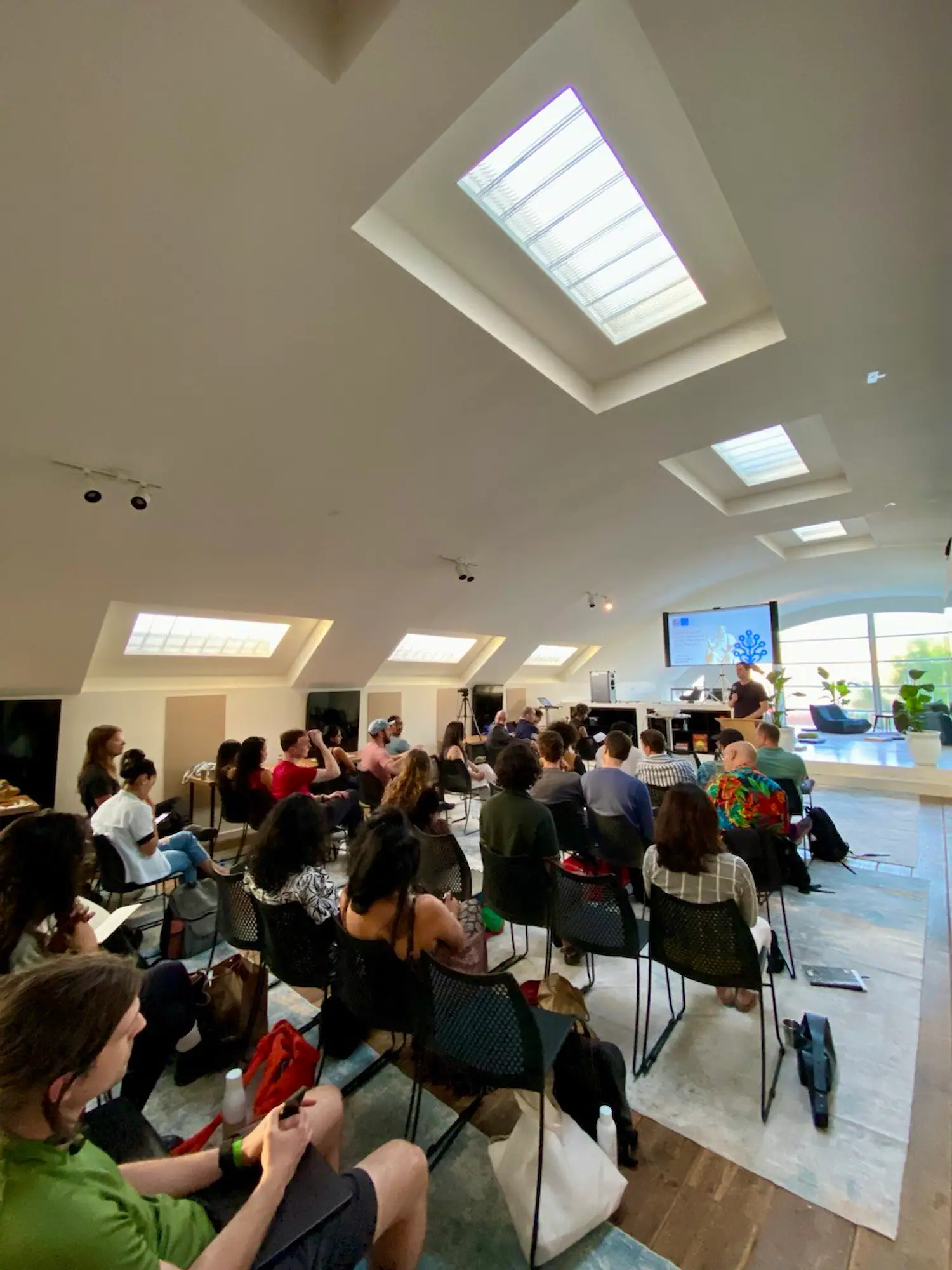
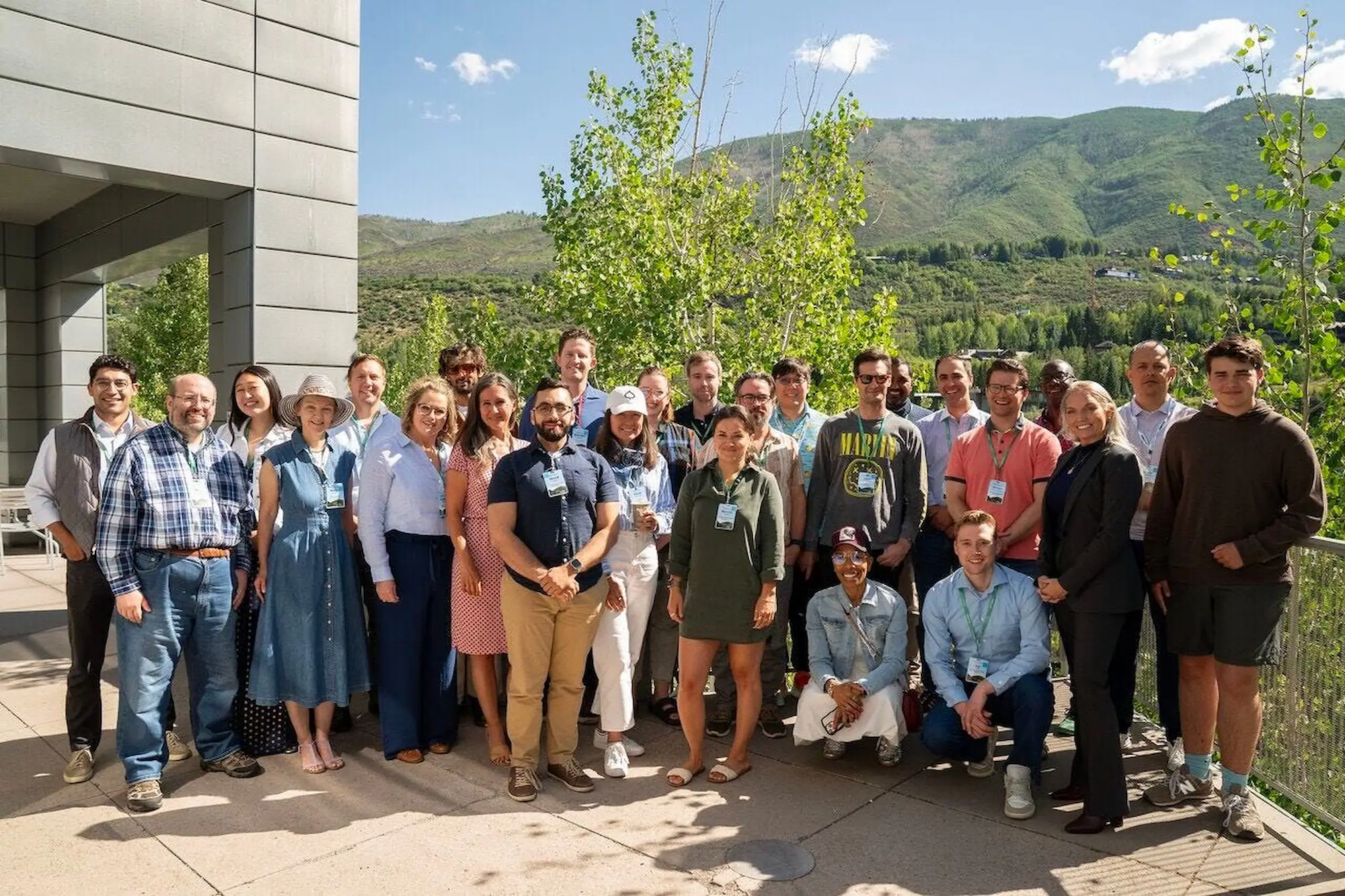
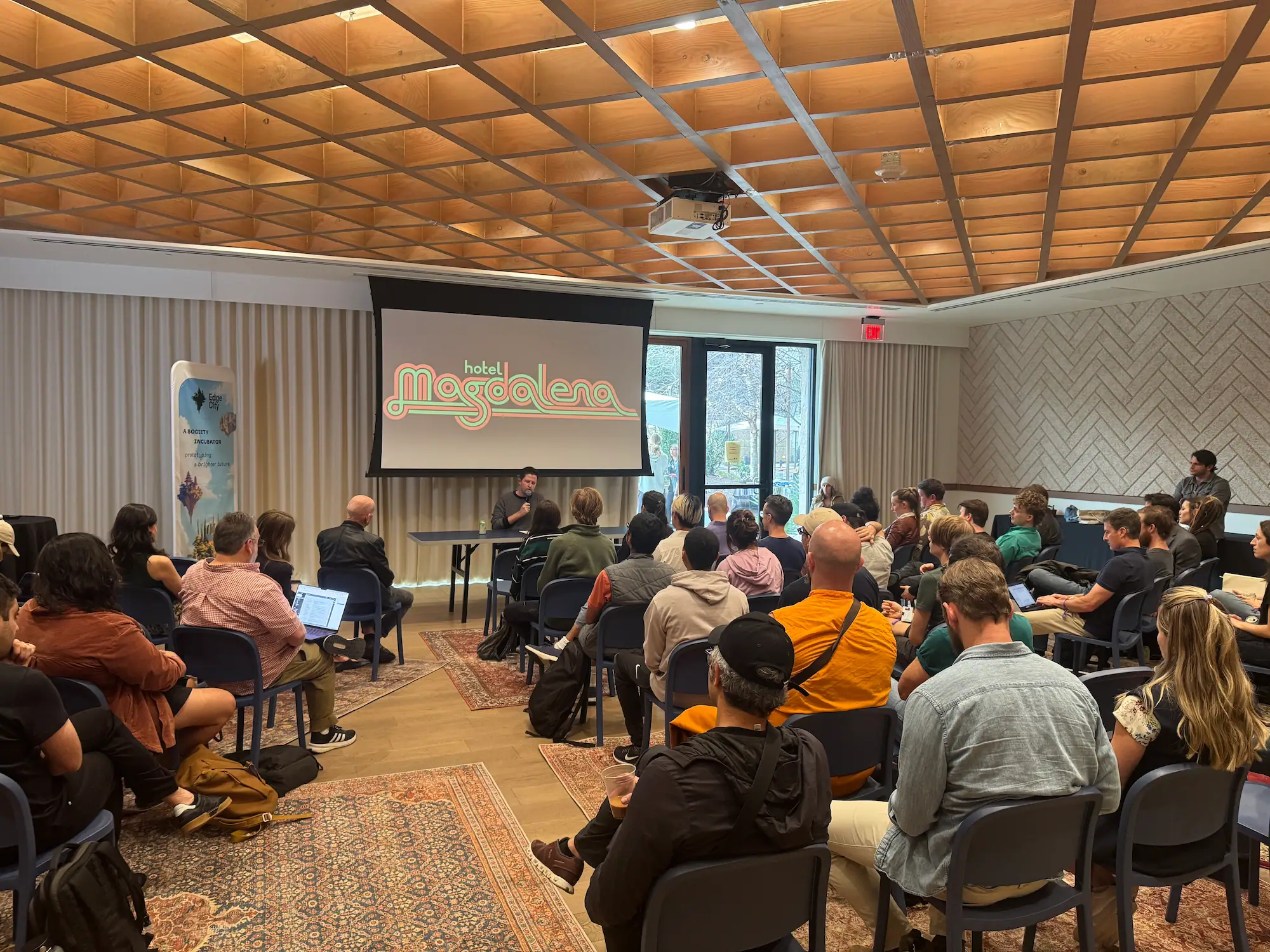
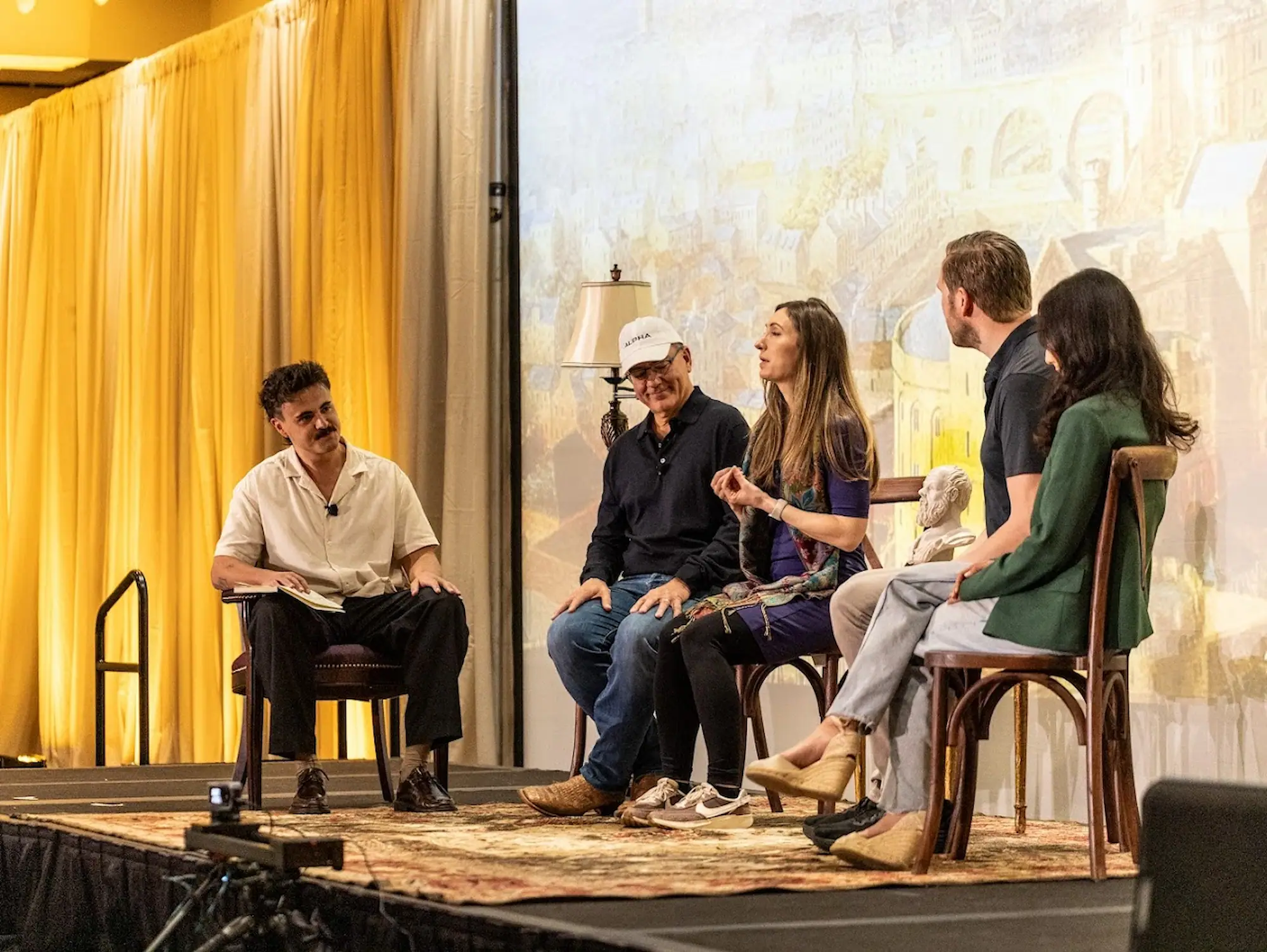
We partner with leading institutions like Aspen Institute, St. John’s College, Liberty Fund, and Edge Esmeralda to explore how enduring principles—like human autonomy, truth-seeking, and decentralization—can guide the development of frontier technologies.

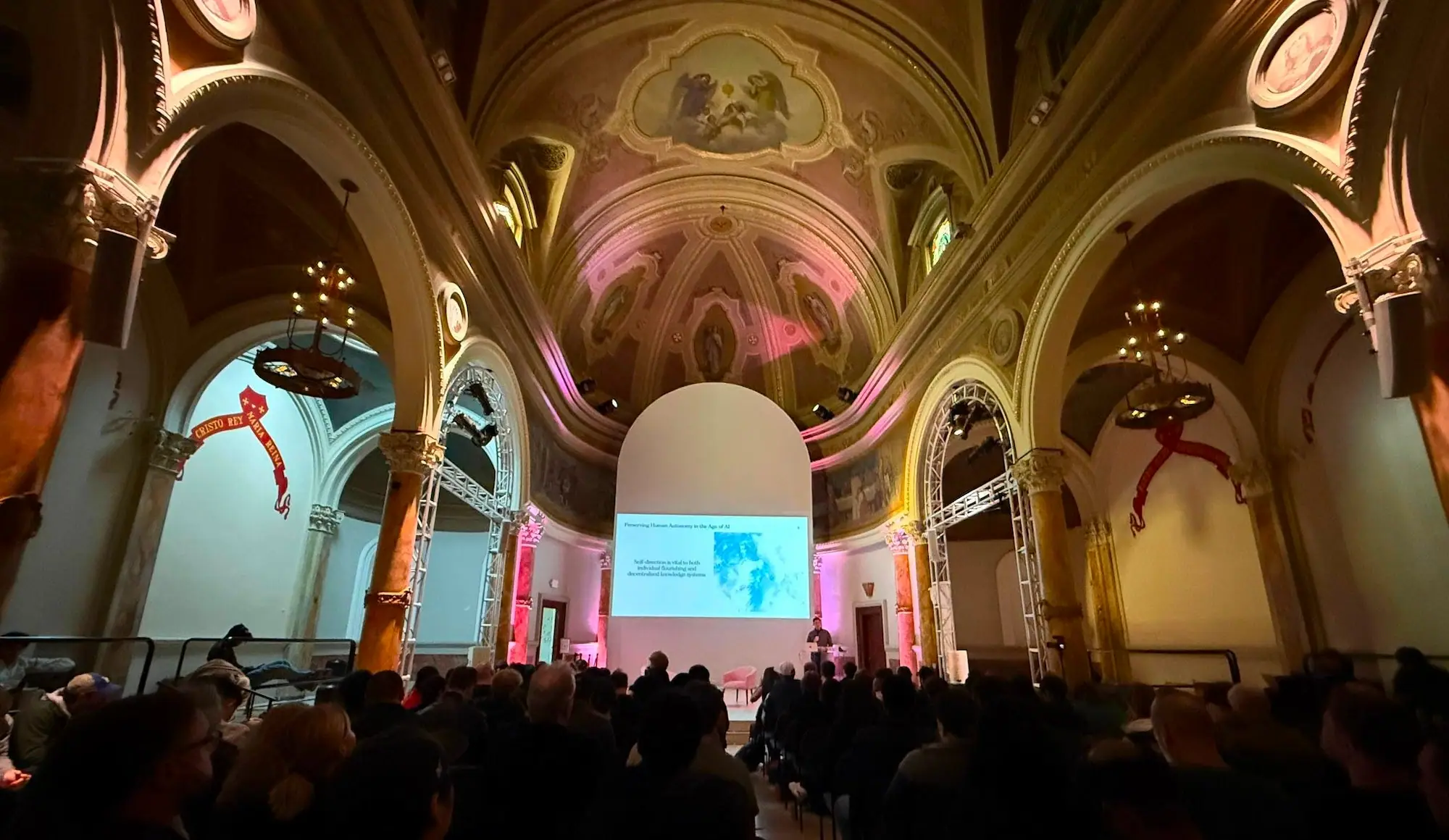
This work spans seminars, workshops, public events, and publications—including our essays and reading lists on the Cosmos Substack.

Sign up for program openings

Team

We are a multidisciplinary group of technologists, philosophers, thinkers, and builders.

Brendan McCord
Founder & Chair

Brendan McCord is the founder and Chair of the Cosmos Institute and a key thinker at the intersection of AI and philosophy. In the private sector, Brendan was the founding CEO of two AI startups that were acquired for $400 million. In the public sector, Brendan was the principal founder of the first applied AI organization for the US Department of Defense and author of its first AI strategy. Brendan is a graduate of MIT and Harvard Business School and was a Visiting Fellow at St Catherine’s College at the University of Oxford. After MIT, he spent 610 days underwater on a submarine. He lives in Austin, TX with his wife and two children.

Adriane McCord
Founder & Board Member

Adriane McCord co-founded and serves on the board of the Cosmos Institute. Her work bridges high-performance business, modern psychodynamic therapy, and timeless wisdom on human potential. From small-town Texas roots, she graduated from the University of Texas at Austin Business Honors Program and earned an MBA from Harvard Business School. She held leadership roles in strategy and operations at various scales, from an a16z-backed startup, to LinkedIn/Microsoft, to advising Fortune 500 executives. Adriane is deeply committed to human flourishing, pursuing a Master’s in Counseling at Northwestern University while directing significant philanthropic resources to empowering individuals to achieve holistic success and fulfillment in a technological world.

Kush Kansagra
Head of Strategy

Kush Kansagra is the Head of Strategy at the Cosmos Institute. Before joining, he was a Product Lead at 80,000 Hours where he built services to help identify and connect talented individuals with opportunities to tackle global challenges (including in AI security, policy and alignment). Earlier in his career, he worked as a strategy consultant with the Boston Consulting Group and a sports-specialist firm, and as an editorial researcher at The Economist. He studied philosophy, politics and economics at the University of Oxford, where he captained the tennis team and picked up a lasting interest in Ancient Greek philosophy.

Avantika Mehra
Chief of Staff

Avantika Mehra is Chief of Staff at Cosmos Institute. Previously, she worked with senior leadership on strategy and operations at Avataar AI, a Sequoia-backed startup building immersive storytelling for brands. As a consultant at Bain & Company’s Washington D.C. office, she worked on projects for clients in venture capital, growth equity, and consumer products. Avantika attended the University of Virginia as a Jefferson Scholar, and graduated with a degree in Cognitive Science. In her free time, she enjoys bouldering and meditating.

Harry Law
Editorial Lead

Harry Law is the Editorial Lead at the Cosmos Institute. He’s a researcher at the University of Cambridge and the Leverhulme Centre for the Future of Intelligence. Harry was previously a senior researcher at Google DeepMind where he worked on policy, safety, and ethics. His work has appeared in outlets including Time, The Guardian, The Economist, WIRED, MIT Tech Review, Nature, New Scientist, and more. Harry received a grant from Emergent Ventures to write about the history of AI, which he does via the Learning From Examples newsletter.

Jack Clark
Founding Fellow

Jack Clark is a co-founder of Anthropic, an AI safety and research company, and a prominent figure in the field of AI policy. He is the co-chair of the AI Index, a leading resource for data and insights on AI, and an expert member of the Global Partnership on AI. Previously, Clark served as the policy director at OpenAI, where he played a key role in shaping global discourse on AI ethics and governance. In addition to his professional roles, he authors Import AI, a widely-read newsletter that covers the latest developments in AI. Clark is also actively involved in various international AI initiatives, including the OECD’s working group on AI and Compute.

Tyler Cowen
Founding Fellow & Board Member

Tyler Cowen is the Holbert L. Harris Professor of Economics at George Mason University and the Director of the Mercatus Center, a research center dedicated to market-oriented ideas. Cowen is the co-author of the popular economics blog, Marginal Revolution, and the host of the podcast Conversations with Tyler, where he interviews leading thinkers on a wide range of topics. He has authored several best-selling books, including The Great Stagnation and Average is Over, which explore economic trends and their impacts on society. Cowen is frequently cited as one of the most influential economists of the last decade.

Joel Lehman
Cosmos Fellow

Joel Lehman is a machine learning researcher specializing in open-endedness—the study of creative divergence processes like biological evolution, science, art, and markets. He led a research team at OpenAI, was a founding member of Uber AI Labs, and co-authored the influential book “Why Greatness Cannot Be Planned,” which challenges conventional objective-based approaches to innovation.

At Cosmos Institute, Joel is reworking philosophical conceptions of virtue to be fittingly embodied by machine learning systems so they can better serve human flourishing.

Bethanie Maples
Cosmos Fellow

Bethanie Maples is the Founder & CEO of Atypical AI and holds a PhD from Stanford University in HCI for Learning, Education Policy, and Artificial Intelligence Policy (2021). Drawing on her experience as a Technology Lead at Google X (the Moonshot Factory) and as a researcher at Stanford’s Institute for Human Centered Artificial Intelligence (HAI Lab), Bethanie designs embodied AI and human-machine interface systems that prioritize cognitive development and education.

Her research at the Cosmos Institute focuses on launching a large-scale empirical study examining AI’s impact on human autonomy, investigating whether AI systems strengthen independent thinking or gradually erode self-reliance through sustained interaction.

Gavin Leech
Cosmos Fellow

Gavin Leech is a multidisciplinary researcher and cofounder of Arb Research. Currently serving as a Visiting Fellow at the Leverhulme Centre for the Future of Intelligence at the University of Cambridge, Leech has published 15+ papers in prestigious journals including PNAS, Science, and NeurIPS, and was recognized with an Emergent Ventures grant in 2021. Beyond his formal research, Leech has maintained an active online presence since 2010, publishing over 140 blog posts and writing more than 1,100 book reviews.

Leech’s fellowship centers on creating high-dimensional philosophical embedding spaces to map conceptual connections across philosophical texts.

Blake Elias
Cosmos Fellow

Blake Elias is a technologist working at the intersection of AI, biology, and complex systems. He earned both his B.S. and M.Eng. in Electrical Engineering and Computer Science from MIT, with a concentration in Philosophy. His Master’s thesis developed a robotic system for high-throughput DNA assembly that reduced reaction volumes tenfold and produced 130 new genetic constructs.

As a Software Engineer for ML Accelerators at Google, Blake developed hardware fuzzing tools that detected over 100 defective TPUs across Google’s datacenter fleet. At NECSI, he modeled pandemic response as a reinforcement learning problem, and as a Microsoft Research AI Resident, he created novel human-machine interfaces for land cover mapping.
At the Cosmos Institute, Blake is developing AI systems that map philosophical questions to networks of sub-questions, exploring new approaches to reasoning.

Carina Peng
Cosmos Fellow

Carina Peng is a machine learning engineer at Apple with a diverse academic and project background. While completing her B.A. Honors degree in Computer Science and Philosophy at Harvard College, she helped kickstart Harvard’s Undergraduate Data Analytics Group and led programming and outreach for the Harvard College China Forum. Carina has worked on helping build the homegrown software system that runs all Tesla Gigafactories, statistical applications used across epidemic intelligence at the World Health Organization, and algorithmic pricing engine at QuantCo. Carina was a John Harvard Scholar, Mahindra Fellow, and studied abroad in Peking University and Oxford University.

Whitney Deng
Cosmos Fellow

Whitney Deng is a software engineer at LinkedIn. She recently graduated Phi Beta Kappa, summa cum laude from Barnard College, Columbia University, where she was awarded the Jonathan M. Gross Prize for Academic Excellence as the top graduate in computer science. Whitney played a key role in a NASA-funded experiment on antibiotic resistance in microgravity aboard the International Space Station, designing and building the automated system for bacterial cultures. In addition, she previously interned at Meta and read computer science and philosophy at Oxford. She was a 2024 Rhodes finalist and is an inductee of Upsilon Pi Epsilon, the international honor society for the computing and information disciplines. She is also an avid grass-toucher and nut butter nutter.

Samuele Marro
Incubation Fellow

Samuele Marro is a DPhil student at the University of Oxford, working on scalable, decentralized agent networks with Microsoft. He is the head of the Institute for Decentralized AI, a project of the Cosmos Institute to help build the research knowledge and infrastructure for decentralized AI systems. Before joining Oxford, Samuele was awarded an Excellency Degree alongside his BSc in Computer Science and MSc in AI at the University of Bologna. He is also the head of the Lightweight Agent Standards Working Group and an avid supporter of open source AI.

Ivan Vendrov
Founding Fellow

Ivan Vendrov is an AI researcher working on collective intelligence at Midjourney, building AI tools to help people understand each other and cooperate voluntarily at scale. He previously worked at Google and Anthropic and co-founded Omni, an ML company seeking to augment human intelligence by bringing knowledge directly to thought. He is obsessed with understanding, publicizing, and improving the social and cultural impacts of AI technologies, maintaining a special interest in recommender systems & social media.

Jules Desai
COSMOS FELLOW

Jules Desai is a philosopher, computer scientist, and electronic musician. His research spans advanced reasoning capabilities in large language models (LLMs), the development of neurally-inspired, energy- and compute-efficient machine learning models (for which he is currently founding a startup), and the intersection of logic, AI, and the philosophies of Kant, Heidegger, and Wittgenstein. A former researcher at the Digital Ethics Lab of the Oxford Internet Institute, Jules recently concluded an academic hiatus, during which he composed and produced four albums of electro-acoustic music, blending techno, classical, and jazz. These albums are set to be released through his own label, Vasuki Sound. He holds a BPhil in Philosophy from the University of Oxford, focusing on cognitive science, Wittgenstein, and Heidegger, and an MPhysPhil in Physics and Philosophy from the University of Oxford, where he received two Gibbs Prizes for outstanding achievement.

Alex Komoroske
Cosmos Grants

Alex Komoroske is a systems thinker and product strategist known for his pioneering work on complex adaptive systems and platform development. He studied Social Studies at Harvard University, where he developed his deep interest in the dynamics of human systems and organizational behavior. Over his career, Alex has held key roles at companies like Google and Stripe and is a strong advocate for a “gardening” approach to platform development– focusing on nurturing and guiding systems as they organically evolve rather than exerting rigid control. Alex frequently shares his insights through essays, podcasts, and presentations, delving into topics like organizational dynamics, open ecosystems, and the philosophical implications of technology.

Brian Hooks
Board Member

Brian Hooks is chairman and CEO of Stand Together and president of the Charles Koch Foundation. Previously, he served as executive director and COO of the Mercatus Center at George Mason University. In 2021, the TIME100 Next list recognized Brian as a leader shaping the future of his field. Brian is co-author with Charles Koch of Believe in People: Bottom Up Solutions for a Top Down World. He serves on several boards, including the Mercatus Center, Cosmos Institute, Economic Policy Innovation Center (EPIC), Institute for Humane Studies, Reason Foundation, and The Just Trust. Brian is a graduate of the University of Michigan and lives in Alexandria, Virginia, with his wife and daughter.

Andrew Keenan Richardson
COSMOS FELLOW

Andrew Richardson is a researcher and ML engineer focused on bringing insights from cognitive neuroscience into practical AI systems. His current mission is to help language systems think and reason more like humans. His recent work is in the SF startup scene, working on foundational language model training with an emphasis on reasoning and code generation systems. His previous research was through the Astera Institute, focusing on alternatives to backpropagation with inspiration from models of neural computation. In a world before LLMs, he worked on conversational systems at the Google Assistant where, among other things, he used ML to find the optimal joke to delight the user.

Darren Zhu
Cosmos Grants

Darren Zhu is a synthetic biologist building a new consumer therapeutics startup. A graduate of Yale and a former Thiel Fellow, Darren has worked with a range of biotech startups (Hexagon Bio, Enevolv, and Synbiosys) and research organizations (Berggruen Institute, Ethereum Foundation, and Gates Foundation). He is also developing new media and philosophy projects that explore the aesthetic and epistemic implications of generative models, particularly as they pertain to creativity and scientific discovery. These projects draw parallels between metascience and foundation models, origins of life and open-ended evolution, and economic calculation problems and adaptive markets.

Devin Stauffer
Founding Fellow

Devin Stauffer is a Professor and Associate Chair of Government at the University of Texas at Austin, specializing in classical and early modern political philosophy. He has been a faculty member at UT Austin since 2004 and has also taught at Kenyon College and St. John’s College in Annapolis. Stauffer’s academic work focuses on figures like Plato and Hobbes, with significant contributions to the study of ancient Greek philosophy and the foundations of modern political thought. He has authored several books, including Plato’s Introduction to the Question of Justice, The Unity of Plato’s Gorgias, and Hobbes’s Kingdom of Light. Stauffer has received multiple awards for teaching excellence and has been a fellow of the Carl Friedrich von Siemens Foundation.

Jason Crawford
Founding Fellow

Jason Crawford is the founder of The Roots of Progress Institute, a nonprofit organization dedicated to understanding the history and philosophy of industrial advancement and promoting a culture of progress. Before founding the organization, Crawford spent 18 years in the tech industry as a software engineer, engineering manager, and startup founder, including roles at companies like Amazon and Groupon. Crawford writes extensively about the progress movement, has contributed to the MIT Technology Review, and has been recognized as a thought leader by outlets like BBC and Vox.

Jason Zhao
Cosmos Grants

Jason Zhao is the co-founder of Story, an IP platform designed to enhance creativity on the internet through decentralized technology. Before founding Story, Jason was the youngest ever Product Manager at DeepMind focused on productionizing Google’s cutting-edge artificial intelligence models across industrial and enterprise applications. He is an active angel investor in over 20 frontier technology startups. Jason served as the founding Editor-in-chief of Stanford Rewired, a magazine focused on the intersection of storytelling and technology. Jason has lectured on blockchain, startups, and philosophy at Stanford, Harvard, Oxford, and other universities. Jason received both a Bachelor’s in Philosophy with highest honors and Master’s in Computer Science at Stanford University.

Philipp Koralus
Founding Fellow

Philipp Koralus is the McCord Professor of Philosophy and AI at the University of Oxford and Director of the Oxford Human-Centered AI Lab (HAI Lab). Previously, he was the Fulford Clarendon Professor of Philosophy and Cognitive Science at the University of Oxford and Fellow at St. Catherine’s College. His research–including his recent book, Reason and Inquiry–focuses on the nature of reason. Koralus has developed a new mathematical framework for understanding human-like reason both in success and in failure cases that sheds new light on standards of rationality for AI systems. He holds a Ph.D. in Philosophy and Neuroscience from Princeton University and has collaborated extensively with computer scientists, linguists, and psychologists.

Ryan Othniel Kearns
Cosmos Fellow

Ryan Othniel Kearns is a DPhil (PhD) researcher at the Reasoning with Machines Lab and the Laboratory for Human-Centered AI at the University of Oxford. Ryan researches what Isaac Asimov called “Robopsychology”: his work concerns the cognitive capabilities of frontier AI systems, including valid evaluation techniques for these capabilities and their related alignment challenges. Ryan graduated Phi Beta Kappa from Stanford University with honors and distinction in Philosophy (BAH) and Computer Science (BS). His honors thesis formulated a theory of trust for explainable AI, earning Stanford’s 2022 Suppes Award for Excellence in Philosophy. Ryan was also a Founding Data Scientist at Monte Carlo Data and an Entrepreneur-in-Residence at Entrepreneurs First.

Vincent Wang-Maścianica
Cosmos Senior Research Fellow

Vincent Wang-Maścianica is a research scientist at Quantinuum, a startup scaling quantum computing and developing applications to solve the world’s most pressing challenges. In his academic work, he specializes in AI and cognitive science, with a particular focus on applied category theory, formal linguistics, and AI explainability. He holds a DPhil in Computer Science at the University of Oxford and has contributed to numerous academic papers, often exploring the intersection of language and machine learning. Vincent is involved in projects that investigate how AI models can better align with human common sense and reasoning.

Alessandra Yang
Operations Assistant

Alessandra Yang is the Operations Assistant at the Cosmos Institute and is currently pursuing her Bachelor’s degree in viola performance at the Music and Arts University of the City of Vienna. At Cosmos, she helps manage day-to-day activities and supports various organizational, design, and finance projects. Alessandra served as a business operations assistant at the University of Austin after participating in their inaugural Forbidden Courses in 2022, and in past years, was a fellow at the Hertog Foundation and Freogan Fellowship. As a musician, Alessandra is an alum of Juilliard Pre-College and the Perlman Music Program, and she currently performs at various international festivals. Alessandra is also a certified Permaculture Designer and spends her summers in Tennessee on her mother’s homestead.

Zoe Weinberg
Cosmos Grants

Zoe Weinberg is the founder and managing partner of ex/ante, a venture fund focused on technology that advances human agency and user control over privacy, data, assets, and algorithms. Before founding ex/ante, Zoe worked on ethics and policy issues at the National Security Commission on Artificial Intelligence and Google AI. She also has experience in national security, having worked in Mosul, Iraq, during the counter-ISIL operation in 2017, and in various roles at the World Bank’s International Finance Corporation (IFC) and Goldman Sachs. Zoe holds a BA from Harvard University, a JD from Yale Law School, and an MBA from Stanford’s Graduate School of Business, where she was a Knight-Hennessy Scholar. Her research and writing has been published in the New York Times and Foreign Affairs, among other publications.

Johnathan Bi
COSMOS FELLOW

Johnathan Bi spent his formative years training in mathematics, eventually competing in the Canadian Olympiad. He went on to study philosophy and computer science at Columbia and started Opto Investments as part of the founding team in his senior year. Now, he is working full-time on a lecture and interview series on philosophy.

William Young
Board Member

Will Young is the co-founder and CEO of Sana Benefits, a healthcare company that provides affordable health insurance options tailored for small businesses. With a background that includes leadership roles at Justworks and experience at Google, Will has focused his career on creating solutions for underserved markets. Since founding Sana in 2018, he has grown the company to cover thousands of lives and expanded its workforce to over 100 employees, all while championing innovative, patient-centered healthcare models. Will holds an MBA from Harvard Business School and a BA from Stanford University.